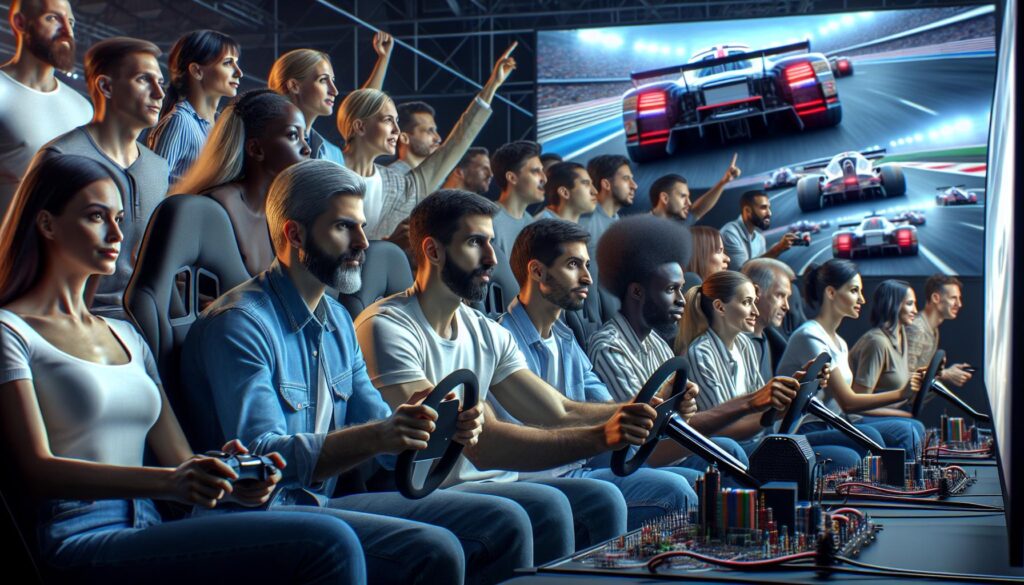
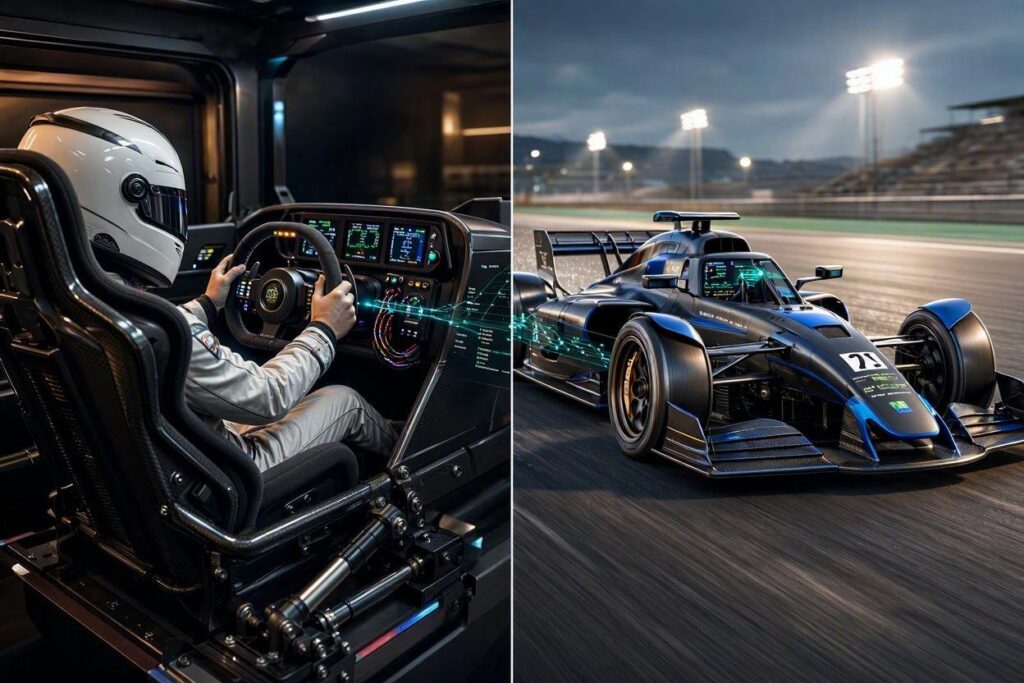
Professional racing has undergone quiet revolution. Real drivers spend significant time in simulators developing skills. Not as games—as training tools. Racing simulators like Forza provide such precise physics simulation that driving experience transfers directly to real vehicles. Elite drivers train substantially in simulators before competitive drives. This convergence of virtual and real racing represents technological milestone transforming professional athlete development. Understanding this simulation-reality bridge through platforms featuring authentic racing like 1xbet reveals how digital experiences now directly improve physical performance.
Simulator Fidelity Reality
Modern racing simulators replicate real physics with stunning accuracy. Tire grip dynamics, aerodynamics, brake performance—all modeled precisely matching real vehicles. Drivers feel identical physics in simulators and actual cars.
Professional simulators cost hundreds of thousands of dollars. Force-feedback steering wheels transmit precise road feedback. Motion platforms recreate acceleration, deceleration, cornering forces. Cockpit design matches actual racing vehicles precisely.
This fidelity enables genuine skill transfer. Drivers practicing complex race lines in simulators develop muscle memory and strategic understanding transferring directly to real tracks. The skills practiced virtually translate functionally to physical racing.
Professional Integration
Formula 1 teams operate sophisticated simulator facilities. Drivers practice starts, track familiarization, race strategies entirely in simulators. Teams test setup changes virtually before implementing on actual vehicles.
Pre-event preparation heavily involves simulators. Drivers new to circuits familiarize themselves in simulators before first physical lap. This preparation accelerates learning and improves safety.
Teams analyze simulator telemetry identifying setup optimization opportunities. Drivers experiment with different approaches virtually finding optimal solutions faster than physical testing alone.
Training Advantages
Simulators provide safe training environment. Drivers can practice dangerous maneuvers, crash repeatedly without consequence. This risk-free environment enables experimentation impossible on real tracks.
Simulator sessions cost substantially less than track time. Professional track rental costs thousands hourly. Simulators amortize costs across unlimited usage.
Simulators enable environmental variation. Drivers practice rain conditions, night racing, various weather scenarios instantly adjusting simulator settings. Real track conditions require waiting for weather.
Training repeatability improves skill development. Drivers practice identical scenarios repeatedly, refining responses. Real track conditions change constantly, preventing identical repetition.
Young Driver Development
Aspiring professional drivers begin careers entirely in simulators. They develop fundamental skills, racing craft, and competitive psychology virtually before expensive real track progression.
Simulator performance identifies talent efficiently. Teams evaluate hundreds of drivers through simulators before investing in actual racing programs.
Junior drivers accumulate massive experience virtually—thousands of simulated race hours before first physical race. This preparation accelerates real-world progression substantially.
Transfer to Reality
The magic occurs when virtual practice translates to real-world performance. Drivers report feeling familiar with circuits despite first physical visit. Track layouts, corner characteristics, braking points feel known from simulator experience.
Muscle memory developed virtually activates during real driving. Drivers find their bodies responding correctly through unconscious simulator-developed patterns.
Performance improvements from simulator training manifest measurably. Drivers using simulators extensively show faster lap-time progression than those relying entirely on physical track time.
Competitive Advantage
Teams gaining simulator expertise gain competitive advantage. They optimize vehicle setup faster. Drivers develop strategies more efficiently. Race preparation improves measurably.
Esports racing competitions use identical simulator platforms, creating interesting dynamic where pure simulator competitors challenge traditional drivers. Some esports-only racers compete impressively against professional drivers.
The Hybrid Advantage
The most successful modern drivers seamlessly blend simulator training with physical track time. They use simulators for foundational skill development, environment familiarization, and setup optimization. Physical track time focuses on verifying simulator predictions and final preparation.
This hybrid approach maximizes learning efficiency. Drivers arrive at races better prepared, requiring less track time acclimating. This compressed preparation timeline provides competitive advantage.
The Realistic Limitation
Despite simulator sophistication, physical racing introduces elements simulators can't perfectly replicate. G-forces feel different. Heat management differs. Tire temperature dynamics prove surprisingly complex. Mental pressure intensifies in actual competition.
Simulators can't perfectly replicate human factors—instinct, intuition, mental resilience. Some racing situations require learned experience transcending simulator capability.
The gap between simulator and reality narrows constantly as technology improves. Modern drivers report remarkably small adjustment periods transitioning from simulators to actual racing.
Future Trajectory
Simulator training will increase as technology improves. New drivers will spend higher percentages in simulators before physical progression. This trend reduces entry costs while improving preparation quality.
Professional racing will rely increasingly on simulator development. The most prepared drivers will demonstrate extensive simulator training backgrounds.
Conclusion
Racing simulators transcended entertainment becoming legitimate training tools. Professional drivers train substantially in simulators developing competitive skills. The physics fidelity transferred virtual practice to real-world racing performance improvements. This convergence will continue deepening as simulator technology advances. The future champion racers will likely be those who mastered simulator training before reaching actual tracks, demonstrating how digital experiences increasingly enable real-world expertise development.